Driving Schoolwide Science Engagement at Royal Palm STEM Museum Magnet
School Overview
Location: Lauderhill, Florida — Broward County Public Schools
School Size: Approximately 750 students, serving Pre-K through 5th grade
School Profile: Royal Palm STEM Museum Magnet is a Title I elementary school in Broward County Public Schools. The school combines core elementary instruction with a STEM-focused magnet program designed to encourage curiosity, problem-solving, and hands-on learning. Royal Palm serves a high-needs student population with a strong focus on academic growth, student engagement, and equitable access to learning opportunities.
A Historic Year for Royal Palm
Royal Palm STEM Museum Magnet entered the 2025–26 school year with ambitious academic goals. By the end of it, the school had accomplished something it had not done in nearly three decades.
Royal Palm earned an A school grade for the first time in 27 years, jumping two letter grades from a C in 2024–25 to an A in 2025–26. Science was an important part of that academic push.
When Dr. Stacie-Jo Howard, K–5 Science Coach and Title I Liaison, was interviewed during the school year, she had a clear target: 60% fifth-grade science proficiency. Reaching that number wasn’t just about preparing students for the Statewide Science Assessment. Her focus was on building stronger habits throughout the year through regular practice, progress monitoring, targeted remediation, student ownership, and consistent implementation.
By the end of the year, Royal Palm had surpassed that goal, reaching 62% science achievement.
The result was part of a larger upward trend. Royal Palm’s science achievement increased from 28% in 2024 to 62% in 2026 as the school moved from a C to an A.
For Dr. Howard, getting there meant creating a more intentional approach to science instruction. When she arrived at Royal Palm, teachers were balancing multiple programs, limited instructional time, and varying levels of familiarity with Progress Learning. Some were unsure how the platform should fit into their existing routines.
Dr. Howard focused first on getting teachers and students engaged, then added systems to support consistent implementation. Over time, that approach grew to include weekly data reports, Galaxy Star Fridays, schoolwide competitions, student trackers, recognition events, and targeted small groups.
“We are not perfect yet, but the growth is undeniable. Our goal is 100% fidelity, and we are committed to leveraging Progress Learning to build strong science habits, celebrate student success, and create a culture of consistent engagement across the entire school.”
— Dr. Stacie-Jo Howard, K–5 Science Coach and Title I Liaison
Making Progress Visible Every Week
One of Dr. Howard’s first priorities was creating greater consistency across classrooms. She developed The Science Scope, a weekly Science Newsletter, with a Progress Learning accountability report that gives teachers a clear snapshot of schoolwide activity. Each report tracks:
- Galaxy Stars earned
- Percentage of students with zero Galaxy Stars
- Percentage of students engaged
- Teacher login activity
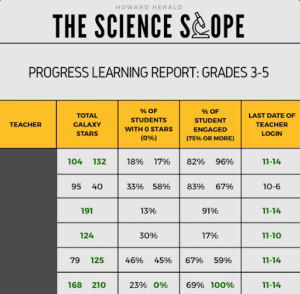
Before introducing the reports, Dr. Howard saw significant gaps in implementation fidelity. Making the data visible each week created clearer expectations and made it easier to see where additional support was needed.
Since launching the reports, she has seen engagement increase significantly and Progress Learning become a more consistent part of science instruction.
But increasing usage was only the first step. The larger goal was to give students regular opportunities to practice while giving teachers useful information to guide what came next.
Turning Fridays Into Galaxy Star Fridays
To create dedicated time for that practice, Royal Palm established Galaxy Star Fridays, when classes incorporate Progress Learning into their science blocks.
The initiative began with grades 2–5, expanded to first grade, and is now moving toward intentional kindergarten participation using the platform’s instructional tools.
Dr. Howard also brought a little friendly competition into the mix. A large Galaxy Star tracker board in the hallway made class progress visible to the entire school. During the first round, every class worked toward the same target: 100 Galaxy Stars with zero students at zero. The first winning classes earned pizza parties, while their teachers received gift cards.
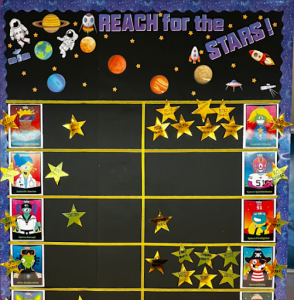
Some classes eventually reached 300–400 Galaxy Stars, so Dr. Howard reset the categories and introduced new rounds to keep students motivated. The initiative continued with Science March Madness and expanded into a schoolwide competition, with one class working toward being named the Progress Learning MVP of the Year.
What started as dedicated practice time had become something students and teachers could participate in together.
Giving Students Ownership of Their Data
As engagement grew, Dr. Howard looked for ways to help students make a stronger connection between their work and their academic progress.
Fifth graders began recording their Galaxy Stars in a dedicated section of their science notebooks. The simple routine gives students a way to track their effort over time rather than relying solely on information available to their teachers.
Royal Palm also introduced GO GREEN cards to make academic data easier for students to understand. Information from Progress Learning reports is transferred onto the cards using color-coded dots, giving students a visual snapshot of where they stand without requiring teachers to continually print lengthy reports.

The cards also help turn data into action.
Teachers can use the results to identify students with similar learning needs and organize targeted small groups for remediation and support. With midyear data available across science standards, students can also use Progress Learning Pathway lessons more strategically based on their proficiency levels.
Instead of simply knowing they need more help in science, students can begin to understand which Florida science benchmarks they’ve mastered, where gaps remain, and what to work on next.
Celebrating Student Success
Royal Palm pairs its focus on data with opportunities to recognize students for the work they’re putting in. Dr. Howard hosts monthly fifth-grade Science Seminars, where students receive Progress Learning certificates and small treats. She has expanded the recognition across the school, with fifth graders celebrated monthly and students in grades K–4 recognized quarterly.
The goal is to give students at every grade level an opportunity to be celebrated for their effort and accomplishments.
Together, the Science Seminars, Galaxy Star competitions, and hallway tracker reinforce a simple message: the work students put into science is noticed.
Using Data to Target Support
The engagement strategies help establish consistent practice. Progress Learning reporting helps teachers decide what to do with the results.
Teachers can identify areas of strength and specific learning gaps, then use those insights to plan remediation, additional practice, and small-group instruction.
Dr. Howard’s GO GREEN cards make the same process more accessible to students. Students can see where they stand, while teachers can quickly determine who may benefit from additional support.
During her interview, Dr. Howard described how targeted conversations, data tracking, and consistent follow-up helped her support an individual student working to improve in science. The experience reinforced an important part of her approach: collecting data matters most when educators and students know what to do with it.
Fifth grade is currently piloting this student-tracking system, with plans to expand classroom trackers schoolwide.
From a Weekly Routine to Schoolwide Results
Royal Palm’s approach is built around a series of straightforward practices: a weekly newsletter that makes implementation visible, dedicated Friday practice, student data trackers, recognition for effort, and reports that help teachers identify where support is needed.
Together, those practices have helped make science a consistent schoolwide priority. And they have developed alongside significant academic growth.
Royal Palm moved from a C to an A in one year, earning its first A school grade in 27 years. In science, achievement increased from 28% in 2024 to 62% in 2026, surpassing the 60% fifth-grade goal Dr. Howard had set during the school year.
For Dr. Howard, the work continues. Her goal is 100% fidelity, with students consistently engaged and teachers using data to make informed instructional decisions.
Royal Palm’s experience demonstrates the value of connecting engagement with purpose. When students can see their progress, teachers can quickly identify learning gaps, and both have clear next steps, science practice becomes more than another item on the schedule.
It becomes a consistent part of how the school helps students master Florida’s science benchmarks.